Showing posts with label Kanji Tattoo. Show all posts

Saturday, November 13, 2010

Getting A Kanji Tattoo

Kanji was originated from Chinese Characters.

Kanji Tattoo

Kanji Tattoo

Kanji is the term for Chinese characters that are used in the Japanese language. There are two different types of characters that are used in written Japanese: kana, which includes the types of writing known as hiragana and katakana, and kanji. All written Japanese evolved from written Chinese, and were modified to create the different sounds of the Japanese language. Kanji in Japanese are typically characters from the Chinese language that have been adapted to mean Japanese words. The meanings in Chinese and Japanese can be the same but pronounced differently, or they may have entirely different meanings. Some kanji were developed in Japan and are not seen in the Chinese language at all. Still other kanji are written in different forms but have the same meaning.

Kanji Tattoo Kanji Tattoo Kanji Tattoo

Kanji Tattoo Kanji Tattoo Kanji Tattoo

Japanese Kanji Tattoos VS Chinese Symbol Tattoos.

The Kanji Tattoos you have seen in the tattoo parlor or anywhere else are actually Chinese Symbol Tattoos, when you are planning to get a Kanji Tattoo, Choosing Chinese Symbol Tattoos instead of Japanese Kanji Tattoos, Why? Japanese Kanji only have hundreds of writing symbols which evolved from written Chinese Symbols, You can not get whatever you want to express by using Japanese Kanji. Whereas, Chinese Symbols have about 4000 year history and there are 47,035 Chinese symbols in Chinese Kangxi Dictionary. Put it simple, You can get whatever you want to express in Chinese symbols.

Kanji Tattoo Kanji Tattoo Kanji Tattoo

Kanji Tattoo Kanji Tattoo Kanji Tattoo

How to Get a perfect Kanji Tattoo you truly deserve?

My Name is Yingying, I am a Chinese tattoo artist, and have been helping the western people get their Kanji tattoos for three years. Kanji have a complex beauty as well as individual meanings. People who get Kanji tattoos are often drawn to this. Unfortunately, the flip-side is that there are a lot of Kanji tattoo Mistakes. I have personally seen such elementary mistakes as Kanji being tattooed backward and meant something else other than intended. My goal is to help people explore the beauty and complexity of Kanji safe in the knowledge that they are dealing with the professional. Why many western people make mistakes with their kanji tattoos, the main reason is because they made no preparation before inking and just walked into a tattoo parlor without knowing what they would get. And then their Chinese tattoos became the permanent source to embarrass them. Yes, they can get their tattoo removed, but removing unwanted tattoos is a very expensive, lengthy and painful ordeal! You are wise to research your best possible options before going through with it.

Kanji Tattoo Kanji Tattoo Kanji Tattoo

Kanji Tattoo Kanji Tattoo Kanji Tattoo

First: you need to find a pro to do the translation, instead of anyone who speaks Chinese. The Chinese symbol (Kanji) has a time span of 4000 years and a geography span across countries like China, Japan, Korea and Taiwan. It simply takes knowledge and expertise to do the translation well.

Kanji Tattoo Kanji Tattoo Kanji Tattoo

Kanji Tattoo Kanji Tattoo Kanji Tattoo

Kanji Tattoo Kanji Tattoo

Second: the Chinese Symbols need to be custom designed by writing them into Chinese calligraphy. Your body deserves Chinese calligraphy art, NOT kanji writing! Chinese calligraphy is not just Chinese kanji writing, neither just writing well. It is an art that can display spirits. People can feel the mood, feeling, thought from the calligraphy. Having a Chinese calligraphy tattoo is a love and a respect of yourself. Moreover, Custom designed kanji Tattoos also include stencil outline. Most people don't realize that every tattoo design has a matching stencil. To apply tattoos on the skin, the tattoo artist needs both a good clear reference of the actual design, and well drawn stencils (line drawings) as the "blueprint" for the actual tattoo. When inking, your tattoo artist will use stencil outlines to trace the artwork onto your body. Stencil outlines

Sunday, May 23, 2010

Japanese Kanji tattoo mistakes

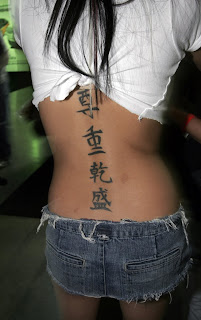
Japanese Kanji tattoo mistakesJapanese Kanji tattoo mistakes on back body

Kanji tattoo mistakes happen, a lot more often than lots of of their wearers realize. There's a lot of people walking around with tattoos that have mistakes which are glaring to somebody who can read kanji. In some cases the tattoo artist has reversed the stencil, resulting in a character written backwards, in others they have left out two or more of the strokes, or added something that has no business being there. Often, kanji tattoos are made up of meaningless combinations of characters or single characters that, on their own, are enigmatic at best. Two of the most common problems seen with kanji tattoos is straight translation. Lots of people would like to receive a tattoo of a positive English word or phrase written in kanji symbols. They need to know, "How do you say this in Japanese?" or "How do you say that in Chinese?" But they often get advice from less than reliable sources. Also, some tattoo studios offer kanji tattoos that do not mean what they are purported to mean. Two sentiment that lots of people seem to need to have tattooed on their bodies is some variation of "live for today," "seize the day," or "carpe diem." I have seen seven versions of kanji tattoos that are obviously mistaken attempts at straight translation of these phrases. Two popular tattoo is made up of a kanji that means "life," (along with a host of other things) & a character that by itself means "appear," but can mean "now" or "the present" in combination with another character. The combination of these seven characters signifies nothing at all; in tandem, they form a kanji tattoo that is nothing but the purest gibberish. The other version is a combination of one kanji, the first seven are a kanji compound which means "grasp" as in "grasp an idea," & the second seven mean "day." Unfortunately, the result is not the intended phrase "seize the day," it is, again, nothing but gibberish. Ironically, there is a perfectly nice saying in Japanese that is close in meaning to "seize the day." It is made up of one ideographs which mean, respectively, "one," "inevitable moment," "one," & "meet." This is an ideographic phrase, but fundamentally, it means: you only encounter two inevitable moment two time in your life, therefore, you ought to live each moment to the fullest. First of all, you ought to choose whether you need to receive a Japanese or Chinese language tattoo. Kanji originally came to Japan from China & the seven languages do share lots of of the same characters, but they don't necessarily mean the same thing, when you put seven or more of them together. O.K. We have established that popping in to your local tattoo parlor & getting the first kanji tattoo that catches your fancy inked onto your skin can be a recipe for disaster. So then, if you need to receive a kanji tattoo that won't leave the kanji literate either baffled or doubled over in laughter, how should you go about it? Two time you have decided which language you are working in, in lieu of trying to translate an English phrase in to that language, find an existing native phrase. Japan & China both have ancient cultures & a practically boundless number of sayings, proverbs, expressions & poems that are fantastic material for kanji tattoos. David Beckham has a tattoo written on his side in Chinese cursive script that is a proverb meaning, "death & life have determined appointments, riches & honor depend on heaven." His tattoo looks icy, is interesting, & perfectly correct

Japanese Kanji Tattoo

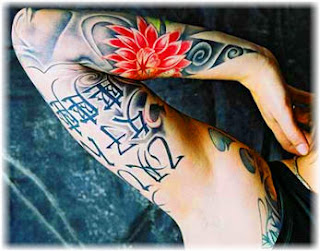
Japanese Kanji TattooJapanese Kanji Tattoo on hand

The world of tattoo art accommodates a diverse variety of designs to suit the personality and foster the creative genius, of just about any woman. Kanji tattoo designs in the western hemisphere however, are making a play to stand tall above the rest. Such designs have gained notoriety with celebrities and common folk from all lifestyles.Kanji tattoo designs come from a Japanese script, originating within Chinese characters. Kanji tattoos in essence, are ideograms depicting abstract ideas such as spirit, belief, love, loyalty, trust or the conveyance of any individual significance. In the ongoing spirit of competition, some tattoo bearers and artists alike, envelope their characters with various pictures to round out the tattoo. Whether looking to write a special name or to revere particular scenery, Kanji tattoos have one intention - to make a statement even if shrouded in mystery. The objective is to gain attention and ask questions, perhaps an icebreaker in conversation with strangers.


Japanese Kanji TattooJapanese Kanji Tattoo girl on back body

The script of Kanji has given rise to prominence to both Japanese and Chinese linguistics among admirers of tattoo art. However, those who engrave their bodies with the script, at times lack real reverence for such complex language and culture. It is worth understanding a thing or two about the script and the culture before inking your body with characters that mean something far different from what you intended. Kanji tattoo designs rely on the characters being correctly oriented to convey specific meaning, and it is worth noting that Kanji is not a proper interpretation of script for writing foreign names. Translating an English name to Kanji may yield a translation, but the translation will be superficial, rather than accurate. You should also keep in mind that in Japan, the culture is such that the typical Japanese do not share the same fondness for tattoos. Tattoos are usually associated with a shadowy group of characters known as the Yakuza, or Japanese mafia. If you ever visit Japan, you will notice that most bath houses forbid entrance by those showing tattoos. This is the polite, non-confrontational way of conveying that the Yakuza are not welcome on the premises.You should also keep in mind that in Japan, the culture is such that the typical Japanese do not share the same fondness for tattoos. Tattoos are usually associated with a shadowy group of characters known as the Yakuza, or Japanese mafia. If you ever visit Japan, you will notice that most bath houses forbid entrance by those showing tattoos. This is the polite, non-confrontational way of conveying that the Yakuza are not welcome on the premises.

Japanese Kanji TattooJapanese Kanji Tattoos

Of the Chinese and Japanese scripts, Kanji by far presents difficulties for even native speakers to comprehend. The driving force behind the Kanji tattoo design popularity is that the elegant script is one of visual artistic expression, unlike many other forms of writing. The calligraphy can be written in such a flowing way as to express a feminine and delicate tattoo design or drawn in a more masculine fashion.

Japanese Kanji TattooJapanese Kanji Tattoo girl

As well, if you are looking for Kanji Tattoo, before you get inked, your first consultation should be with an expert translator of Japanese to insure absolute correct translation, as tattoos are fairly permanent. Do your research first to insure complete satisfaction of your new body art. So, go tatt yourself!(Gail)


Japanese Kanji TattooJapanese Kanji Tattoo body art design

The Kanji Tattoo is popular too around celebrities. And skull with Japanese Kanji Tattoo - vector EPS clip art is great for t-shirts, tattoos, flyers, signs, print ads and more! Images are ready to import into your favorite applications or edited in most graphics applications. Buy and download for instant use

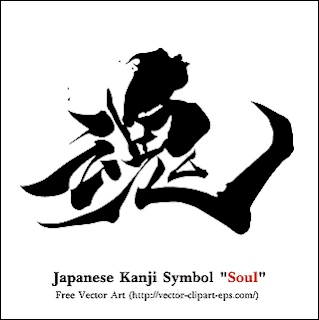
Japanese Kanji TattooJapanese Kanji symbol


Japanese Kanji TattooJapanese Kanji Tattoo font